
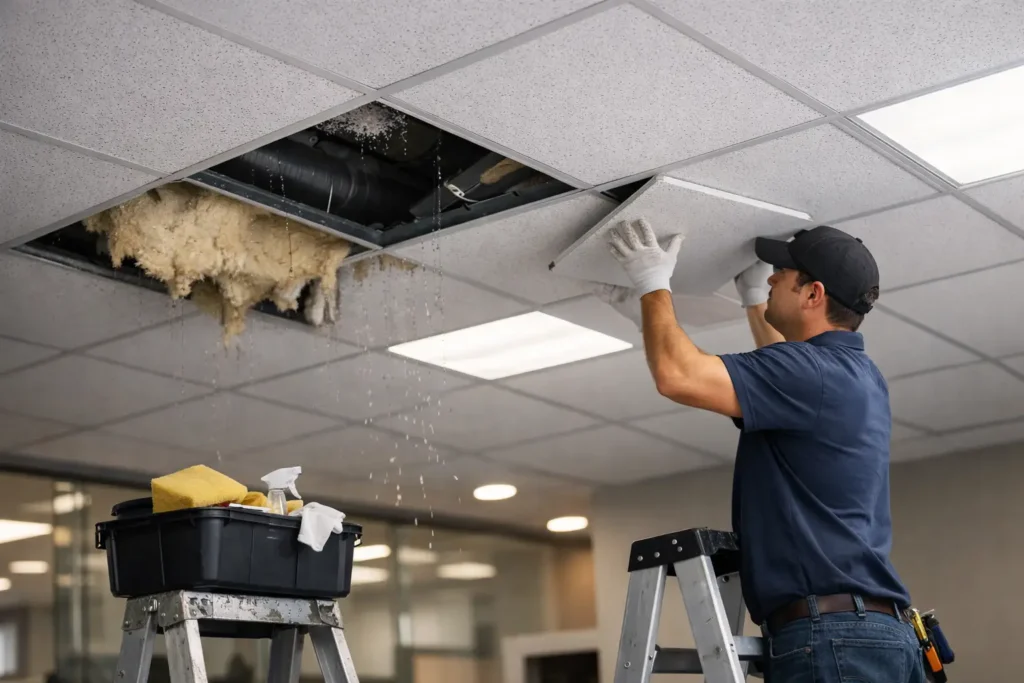
A stained ceiling tile is rarely just a cosmetic problem. In a commercial building, droppings above ceiling panels, urine odor in occupied rooms, or nesting material near ducts can point to contamination hidden across an entire ceiling cavity. Commercial drop ceiling cleanup and replacement should address the source of that contamination, not simply cover it with fresh tiles.
Drop ceilings create a concealed space where rodents can travel, nest, and contaminate surfaces without being seen. When the grid is opened, building owners may find damaged insulation, chewed wiring, torn duct wrap, droppings along beams, or urine-soaked tiles. The right response protects employees, tenants, customers, and the condition of the building while helping prevent rodents from coming back.
When Drop Ceiling Cleanup Is Necessary
A few visible droppings do not always mean every ceiling panel needs replacement. Still, a professional inspection is needed to determine how far activity has spread. Rodents often travel along utility lines, pipe penetrations, structural edges, and HVAC routes above the suspended ceiling. Their contamination can be much broader than the one stained tile visible from the floor.
Cleanup and replacement are usually warranted when tiles have urine staining, odor, droppings, nesting debris, gnaw marks, water damage connected to animal activity, or visible mold-like growth. Porous ceiling tiles can absorb urine and odor. Surface spraying may improve the smell temporarily, but it does not remove contamination held inside the material.
Replacement may also be necessary when rodents have damaged insulation above the ceiling or created openings around pipes, conduits, ducts, and wall transitions. If those access points remain open, new tiles can become the next hiding place rather than the final repair.
Why a Surface Wipe-Down Is Not Enough
The visible ceiling tile is only one part of the problem. A drop ceiling system includes panels, a metal grid, hanger wires, perimeter molding, lighting fixtures, diffusers, fire-sprinkler components, wiring, ductwork, and the cavity above. Contamination may be located on exposed structural surfaces or on materials that cannot be cleaned safely.
Rodent droppings and urine can create odor and sanitation concerns, especially in offices, restaurants, retail spaces, schools, medical facilities, and other occupied buildings. Dry sweeping, vacuuming with ordinary equipment, or pulling down contaminated panels without protective measures can disturb debris and spread particles into the room below.
A professional crew should control the work area, use appropriate personal protective equipment, and remove contaminated debris in a way that limits unnecessary exposure. The goal is not to make the ceiling look clean from below. The goal is to remove contaminated materials, sanitize applicable nonporous surfaces, correct the rodent pathway, and restore the ceiling system correctly.
A Proper Commercial Drop Ceiling Cleanup and Replacement Scope
The exact scope depends on the building, the age of the ceiling system, the level of rodent activity, and whether water or other damage is present. A dependable restoration plan generally follows a clear sequence.
First, the affected ceiling areas are inspected from below and above. Technicians identify droppings, nests, urine staining, odors, damaged insulation, openings, utility penetrations, and signs of active rodents. They should also assess whether the problem is localized or has spread into adjacent rooms, corridors, storage areas, or plenum spaces.
Next, the crew protects the occupied area and carefully removes damaged panels and nesting materials. If insulation, duct wrap, or other porous materials are contaminated beyond practical cleaning, those materials may need to be removed as well. Panels that appear intact but carry strong urine odor should not automatically be reused.
After removal, applicable surfaces in the ceiling cavity are cleaned and sanitized. Metal framing, nonporous pipe surfaces, and portions of the grid may be treatable when structurally sound. Materials that are heavily contaminated, deteriorated, or impossible to clean thoroughly should be replaced rather than left in place.
The next step is exclusion. This is the part many basic pest-control approaches miss. Gaps around utility entries, wall openings, roofline connections, exterior vents, and other access points must be identified and sealed with durable, appropriate materials. Traps or bait may reduce activity, but they do not close the route rodents used to enter.
Finally, the ceiling is restored. Replacement tiles should match the building’s required size, edge profile, fire rating, acoustical needs, and appearance. Damaged grid sections, hanger wires, insulation, or access panels should also be repaired or replaced where needed. The finished space should look orderly, function correctly, and no longer carry the odor or contamination that prompted the work.
Do Not Overlook HVAC, Electrical, and Fire-Safety Components
Above-ceiling spaces are crowded with building systems. That makes cleanup more than a tile replacement project. Rodents may nest near HVAC ducts, chew wire insulation, disturb duct insulation, or contaminate areas around air returns and diffusers. These conditions should be evaluated before the ceiling is closed again.
Electrical concerns require special care. Chewed wiring can create a safety issue, and lighting fixtures should not be removed or reinstalled by anyone unqualified to handle the electrical scope. Likewise, sprinkler heads, alarm devices, and fire-rated assemblies cannot be casually moved to speed up cleanup. Building owners may need coordination with licensed trade professionals and property management requirements before restoration begins.
Older ceiling materials present another reason to slow down and assess the work properly. Some older tiles, mastic, pipe insulation, or textured materials may require testing before disturbance. If regulated materials are suspected, follow applicable testing and abatement requirements rather than treating the job like routine debris removal.
Replacement Choices That Support a Cleaner Building
Standard mineral fiber panels are common because they are affordable and easy to replace, but they are porous. In areas with recurring humidity, frequent cleaning needs, or a history of water intrusion, building managers may consider more washable or moisture-resistant ceiling products when compatible with the space.
The right material depends on the building’s use. A restaurant, healthcare setting, food-storage area, office, retail suite, and warehouse may have different sanitation, acoustic, lighting, and code-related requirements. The cheapest replacement tile is not always the best choice if it fails to meet the needs of the environment.
Before ordering panels, verify tile dimensions, edge type, grid compatibility, color, and required ratings. A mismatched tile can leave an unfinished appearance, while an incorrect product can affect acoustics, lighting reflection, or fire-performance requirements.
Preventing the Next Rodent Problem Above the Ceiling
Replacement is only as effective as the prevention work behind it. Rodents need an entry point, food source, water source, and protected nesting area. The ceiling cavity offers protection, but it is usually not where the problem begins.
Exterior exclusion should focus on vulnerable openings around rooflines, vents, wall penetrations, utility connections, doors, loading areas, and damaged screens. Indoors, food storage, trash handling, leaking plumbing, and cluttered storage zones can support ongoing activity. A building with sealed openings but accessible food waste may still attract rodents searching for a way inside.
Property managers should also schedule periodic inspections after remediation, particularly in older buildings and facilities near landscaping, alleyways, restaurants, dumpsters, or construction activity. Catching fresh droppings or gnaw marks early can prevent another full ceiling restoration project.
When to Call for Professional Help
Do not wait if occupants smell urine, see droppings falling from ceiling panels, notice staining spreading across tiles, hear movement overhead, or find chewed wires or damaged ductwork. These are signs that cleanup may involve more than replacing a few panels.
For homeowners in Southern California, Professional Rodent Cleanup focuses on complete residential attic and crawlspace contamination removal, sanitization, insulation replacement, and exclusion work. Commercial properties should work with qualified commercial remediation, exclusion, and trade professionals who can evaluate the ceiling system, building services, and restoration requirements as one coordinated project.
A clean replacement ceiling matters, but the real result is a sanitized space with damaged materials removed, entry points addressed, and the conditions that allowed rodents overhead corrected before the panels go back up.