
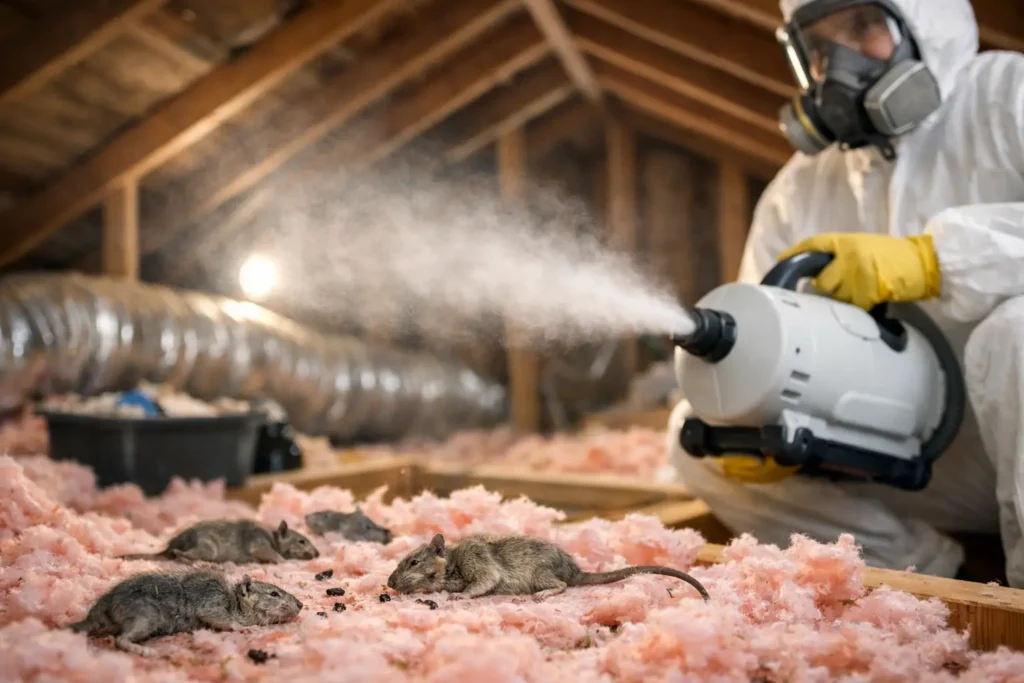
That sharp, stale smell coming from the ceiling is usually a sign that the problem is bigger than a few rodents. If you are searching for how to deodorize rodent infested attic spaces, the first thing to know is this: odor treatment only works when the source of contamination is removed. Sprays and air fresheners may dull the smell for a day or two, but urine, droppings, nesting material, and damaged insulation will keep producing odor until the attic is properly cleaned.
For many homeowners, the smell gets worse when the attic heats up in the afternoon or when the HVAC system starts moving air through the house. That is not just unpleasant. It can point to widespread contamination affecting air quality, insulation performance, and daily comfort. A true fix means cleanup, sanitization, deodorization, and sealing the attic so rodents do not return.
Why rodent attic odors are so hard to remove
Rodent odor tends to sink into everything around it. Urine can soak into insulation, wood framing, stored materials, and dust layers. Droppings break down over time and add to the smell, while nesting debris traps moisture and bacteria. In a moderate to severe infestation, the attic itself starts acting like a reservoir for contamination.
This is why a simple odor treatment often fails. If contaminated insulation stays in place, the smell usually comes back. If dead rodents are hidden in wall voids or attic corners, the odor can remain intense even after surface cleaning. And if entry points are left open, new activity can restart the problem quickly.
There is also a timing issue. A fresh infestation often has a strong ammonia-like odor from urine. An older infestation may smell musty, sour, or decayed because contamination has built up over months. The deodorizing plan depends on what is present, how long it has been there, and how much of the attic has been affected.
How to deodorize rodent infested attic areas the right way
The correct process starts with identifying all contaminated material, not just the most obvious spots. In a lightly affected attic, localized cleanup may be enough. In a heavily infested attic, partial measures usually waste time and money because the odor source is spread throughout the insulation and debris.
Step 1: Confirm the infestation is no longer active
Before deodorizing begins, active rodent traffic has to stop. If rodents are still entering the attic, fresh urine and droppings will continue to build up. That means any odor treatment becomes temporary.
This usually requires a full inspection of rooflines, vents, eaves, utility penetrations, crawlspace transitions, and construction gaps. In Southern California homes, attic access points and roof-edge gaps are common entry areas. Sealing those openings is part of odor control because it protects the cleaned attic from immediate reinfestation.
Step 2: Remove contaminated insulation and nesting debris
This is the step many people want to skip, and it is usually the reason odor problems linger. If rodents have been nesting in attic insulation, that insulation is often saturated with urine and packed with droppings. Once that happens, it is no longer just an insulation issue. It becomes a contamination issue.
Professional cleanup crews use protective equipment and controlled removal methods to bag and contain infested debris without spreading particles through the house. Contaminated insulation, nesting material, and rodent waste need to be removed thoroughly, especially in corners, around duct runs, and near entry points.
If the attic has visible trails or flattened nesting zones, those areas should be treated as high-contamination sections. Spot removal may help in a very limited problem, but widespread odor usually calls for a full attic cleanup.
Step 3: Clean and sanitize exposed attic surfaces
Once the contaminated material is out, the remaining attic surfaces need to be addressed. Wood framing, attic sheathing, joists, and other structural areas can hold residue even after debris is removed. Sanitization helps reduce bacteria, organic residue, and odor-causing contamination left behind.
This is not the same as masking the smell. The goal is to clean the surfaces that were exposed to rodent activity so the attic is not left with a lingering contaminated odor profile. Depending on conditions, this may involve targeted disinfection, surface treatment, and removal of dust and residue from affected sections.
The level of treatment depends on how severe the infestation was. A small isolated problem may only need focused cleaning. A long-term infestation usually requires a broader remediation approach.
When odor treatment actually works
Odor treatment becomes effective after the source has been removed. At that point, deodorization can neutralize what remains instead of trying to cover up an active contamination problem.
Air treatment vs. source treatment
Air treatment can help reduce odor in the short term, but source treatment is what creates lasting improvement. If the attic air smells bad because the insulation and framing are still contaminated, treating the air alone will not solve the issue.
Source treatment focuses on the materials and surfaces where the odor is coming from. In some attics, that is enough. In others, both source treatment and air treatment are used together for better results, especially when odor has spread into adjacent spaces.
Why severe odor may need multiple steps
Some attics need more than one round of deodorization. That does not always mean the first treatment failed. It may mean the contamination was deep, the infestation lasted a long time, or heat is still pulling residual odor from porous materials.
This is especially true when rodent urine has penetrated wood surfaces or when dead rodents were present in concealed areas. In those cases, odor removal can improve dramatically after cleanup but still need follow-up treatment to fully clear the space.
Signs the attic needs professional cleanup, not just deodorizer
If the smell is strong enough to notice from living areas, the problem is usually beyond a simple product application. The same is true if you see droppings around attic access points, hear rodent movement at night, notice stained ceiling areas, or have insulation that looks compressed, shredded, or dirty.
Another red flag is when the odor returns quickly after cleaning attempts. That often means contamination remains below the surface, inside insulation, or near hidden nesting zones. Homeowners can lose a lot of time trying to solve a structural contamination problem with surface-level treatments.
For moderate to extreme infestations, professional remediation is the safer and more complete option. The work is not just about smell. It is about removing hazardous debris, sanitizing the area correctly, and restoring the attic so it supports healthier indoor conditions.
What happens after the attic is deodorized
A clean attic should also be a protected attic. Once contamination is removed and odors are treated, the next step is restoring the space so the problem does not repeat.
Replace damaged insulation
If insulation was removed during cleanup, replacement matters for more than comfort. Fresh insulation helps restore energy efficiency, supports temperature control, and gives the attic a true reset. In many homes, this is the point where the space finally stops smelling stale because the contaminated material is gone and the attic is functioning properly again.
Seal the structure against reinfestation
Odor control without exclusion is incomplete. Even a well-cleaned attic can be reinfested if roof gaps, vent openings, and other access points remain open. Proper sealing protects the investment in cleanup and reduces the chance of repeat contamination.
Monitor for lingering concerns
After remediation, some homes may still need a short period of observation. If odor lingers, there may be hidden contamination in a wall void, duct area, or inaccessible corner. A thorough inspection can usually pinpoint whether that smell is residual or a sign that another source still needs attention.
The fastest path to real odor relief
If you need to know how to deodorize rodent infested attic spaces, the practical answer is simple: remove the contamination first, sanitize the attic, treat the remaining odor, and seal the home to stop future activity. Anything less is usually temporary.
For homeowners dealing with strong attic odor, damaged insulation, or signs of widespread rodent contamination, speed matters. The longer the contamination sits, the deeper it can spread into materials and the harder the odor becomes to remove. A professional attic cleanup and restoration plan gives you a cleaner space, better air quality, and the confidence that the problem was handled at the source.
A bad attic odor is rarely just a smell problem. Once you treat it like a cleanup and protection issue, the solution becomes much clearer.
If the odor returns after treatment, check what a local assessment covers before paying for another round of deodorizing. See Ventura County rodent assessments or Orange County rodent cleanup for the inspection and cleanup options in your area.
4 Responses