
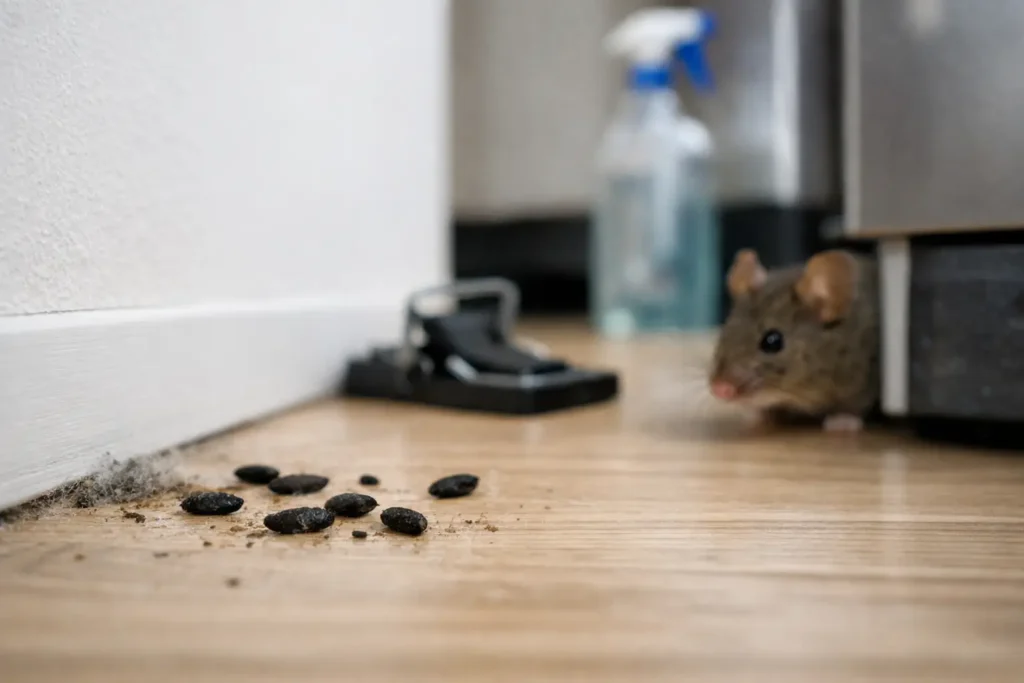
A few dark pellets in a cabinet may look like a pest-control problem. In an attic, crawlspace, wall cavity, or garage, they can signal something larger: contaminated insulation, urine-soaked nesting material, odor, and an active entry point into the home. Are rodent droppings hazardous indoors? They can be, particularly when droppings and urine are disturbed, allowed to accumulate, or present in areas connected to your indoor air.
The right response is serious but measured. Not every rodent dropping creates an immediate medical emergency, and not every exposure leads to illness. But rodent waste should never be swept, vacuumed, or treated as ordinary household dust. A safe solution addresses the contamination, the affected materials, and the gaps that allowed rodents inside in the first place.
Why rodent droppings can be hazardous indoors
Rodents leave more than visible droppings behind. Mice and rats can contaminate surfaces and stored items with feces, urine, saliva, and nesting debris. As material dries, breaks down, or is disturbed, contaminated particles may become airborne. That matters most in enclosed spaces such as attics and crawlspaces, where activity can continue unnoticed for weeks or months.
Exposure can happen when someone enters an affected attic, moves boxes in a garage, handles contaminated insulation, or turns on a system that circulates air near a contaminated area. Young children, older adults, people with asthma, and anyone with a weakened immune system may be more vulnerable to respiratory irritation or illness.
Rodents can carry pathogens associated with diseases such as hantavirus, salmonellosis, leptospirosis, and lymphocytic choriomeningitis. The specific risk depends on the type of rodent, the amount of contamination, whether waste has been disturbed, and local conditions. Southern California homeowners should not assume that a clean-looking attic is a safe attic if droppings, nesting, or urine odor are present.
Just as concerning, heavy contamination can affect the quality and condition of the home itself. Rodent urine can create persistent odors. Droppings can attract insects. Nesting activity compresses and contaminates insulation, reducing its ability to control indoor temperatures and potentially increasing heating and cooling costs.
The biggest risk is disturbing the contamination
The most common cleanup mistake is dry sweeping or vacuuming rodent droppings. These methods can kick dust and particles into the air, turning a contained problem into an exposure concern. Pulling out soiled insulation without the right containment and protective equipment can do the same.
A small, isolated mess on a hard, accessible surface may be manageable using appropriate disinfecting procedures and protective gear. An attic scattered with droppings, shredded insulation, nests, or strong urine odor is a different situation. The volume of contamination, poor ventilation, and difficulty of reaching every surface make professional remediation the safer choice.
Do not assume the problem is finished because you removed a few visible pellets. Rodents often travel along wall edges, framing, pipes, ductwork, and insulation. What is visible near an attic hatch or cabinet may represent only a fraction of the affected area.
Warning signs that point to a larger cleanup need
Heavy or concealed contamination often comes with other evidence. You may notice a stale ammonia-like odor, scratching at night, chewed wiring or stored belongings, torn HVAC ducting, greasy rub marks, or insulation that looks flattened and littered with debris. Finding nests is especially significant because nesting materials can hold urine, droppings, parasites, and odor long after rodents are gone.
If anyone in the home develops flu-like symptoms, fever, breathing difficulty, or gastrointestinal symptoms after a known rodent exposure, contact a healthcare professional promptly. A cleanup company cannot diagnose illness, but removing the source of contamination is an essential part of protecting the home going forward.
What safe rodent contamination cleanup looks like
Effective cleanup is not a quick spray-and-leave service. It is a restoration process designed to remove the contamination rather than cover it up. The exact scope depends on where rodents traveled, how long they were active, and whether insulation or structural materials were affected.
A professional inspection should identify active signs, contamination levels, entry points, and damaged materials. In an attic or crawlspace, technicians may need to remove contaminated insulation and nesting debris, then clean and sanitize the exposed surfaces using methods suited to the material and condition of the space. Odor treatment may also be needed when urine has penetrated insulation or porous building materials.
After cleanup, replacement insulation can restore the thermal barrier that rodents damaged. This step matters because a clean attic with insufficient or compressed insulation may still leave a homeowner with comfort problems and unnecessary energy loss.
The final piece is exclusion. Rodents can fit through surprisingly small exterior gaps around utility lines, roof intersections, vents, foundation openings, and damaged screens. If those access points remain open, a sanitized attic can become contaminated again. Sealing entry points is what turns cleanup into lasting protection.
Are rodent droppings hazardous indoors if they are old?
Old droppings are still a concern. They may no longer look fresh, but dried waste can remain hazardous when disturbed. Age alone does not make contamination safe, especially in dusty attic and crawlspace environments where particles can be spread during maintenance, renovation, insulation work, or storage retrieval.
That said, the urgency and scope of the work should match the actual condition of the property. A few older droppings in a rarely used shed are not the same as widespread contamination above bedrooms or beneath living areas. A thorough inspection helps determine whether cleanup can be targeted or whether full insulation removal, sanitization, and restoration are warranted.
This is also why odor should not be ignored. Even after rodents are removed, urine residues and contaminated nesting material can continue to affect how the home smells. Air fresheners and surface cleaners may mask the issue temporarily, but they do not remove the source.
When to call a professional cleanup team
Call for an inspection when droppings are widespread, appear in an attic or crawlspace, occur near HVAC equipment, are mixed with nesting material, or are accompanied by urine odor or damaged insulation. Professional help is also appropriate if you are unsure whether activity is current, cannot safely access the area, or have already tried pest control but the odor and contamination remain.
The goal is not simply to remove rodents from view. It is to return the affected space to a clean, sanitized, properly insulated condition and close the routes rodents use to get back in. For homeowners in Los Angeles, Orange, Ventura, Riverside, and San Bernardino counties, Professional Rodent Cleanup provides inspections and complete remediation that includes contamination removal, sanitization, insulation restoration, and exclusion work.
Do not wait for a small sign to become a damaged attic, persistent odor, or recurring rodent problem. A careful inspection gives you a clear answer, and a complete cleanup gives your home a healthier place to start.
56 Responses